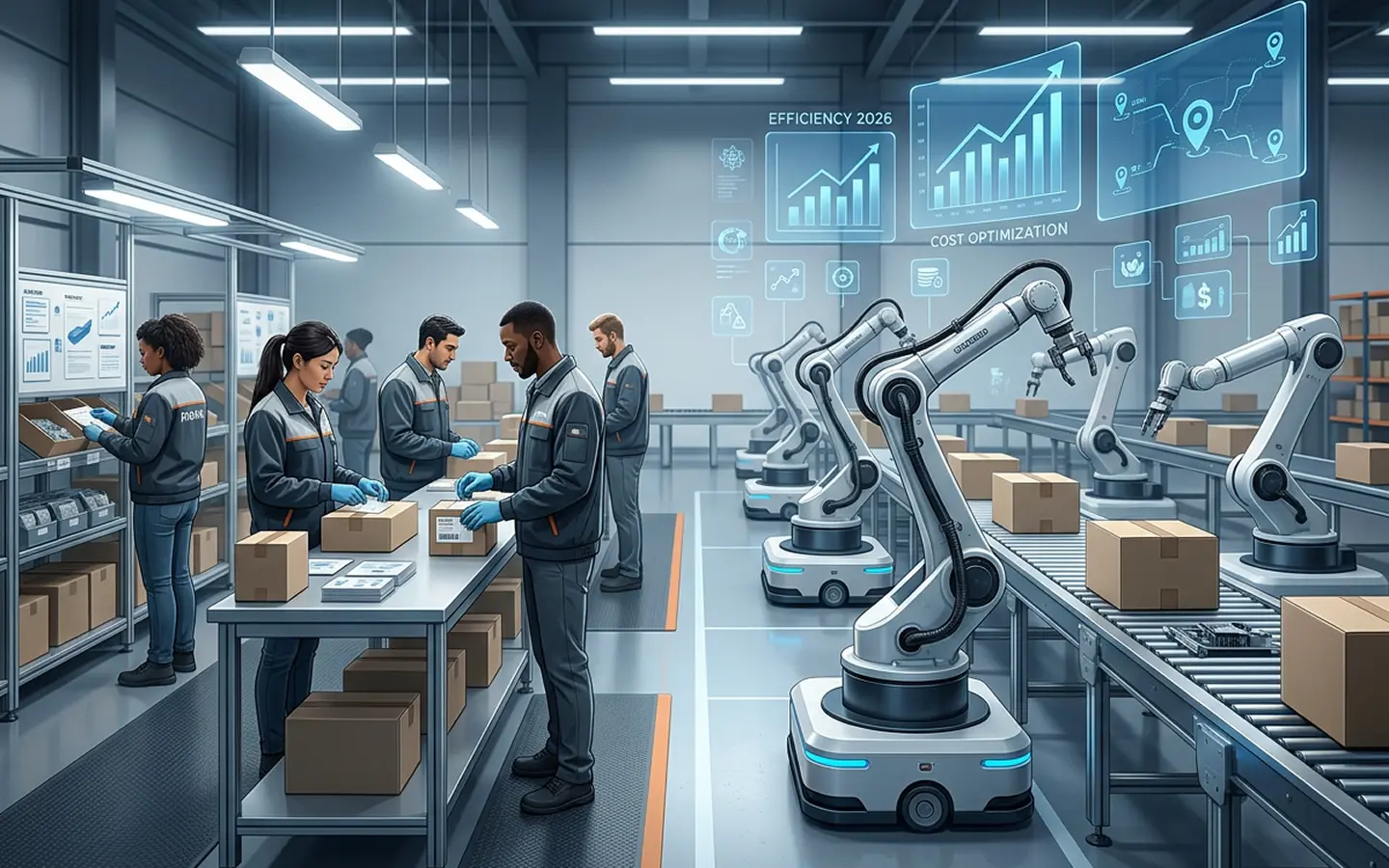
The world of automation is moving to a new level. While just a few years ago robotic systems were associated only with industrial manipulators in factories, today major technology companies are actively testing full-fledged humanoid robots capable of working alongside humans in real-world conditions.
One of the most high-profile demonstrations recently was a presentation by Figure, which showed a humanoid robot working a full shift in a manufacturing facility. Following that, the company launched another demonstration—a direct comparison of human and robot working speeds during production tasks.
The result was revealing: humans still work faster, more flexibly, and more efficiently in many processes. However, the main advantage of robots lies elsewhere—they do not get tired, do not need rest, do not go on vacation, and can work virtually continuously.
That is why businesses worldwide are increasingly investing in the robotization of manufacturing, warehouses, logistics, and services.

Why has the world begun a mass shift to robotization?
Modern business is simultaneously facing several global challenges:
- Labor shortage;
- Rising wages;
- Difficulty in recruiting staff;
- High employee turnover;
- The need to operate 24/7;
- The demand for stable product quality.
This is felt particularly acutely by:
- Manufacturing enterprises;
- Logistics companies;
- Warehouses;
- Restaurants;
- Large online stores (e-commerce);
- The agricultural sector.
Therefore, automation is ceasing to be a "technology of the future" and is becoming an economic necessity.
Human vs robot: who is more efficient?
As of today, humans still possess a number of advantages:
- Flexibility of thinking;
- Quick decision-making;
- Adaptation to non-standard situations;
- Creative approach;
- Fine motor skills;
- Emotional intelligence.
However, robots have their own strong suits:
- Can work without breaks;
- Do not get tired;
- Do not make human errors;
- Do not require vacations;
- Do not depend on mood or physical condition;
- Can work in hazardous conditions;
- Ensure stable productivity.
That is why most modern enterprises are transitioning to a mixed model:
- Humans control the processes.
- While robots perform routine operations.
Why the 8-hour workday doesn't apply to robots?
Historically, the eight-hour workday was the result of a long struggle by workers for their rights. Previously, people worked 10–14 hours a day, which often led to exhaustion and injuries.
Robots, on the other hand, have no physiological limitations:
- They do not need sleep;
- They do not get tired;
- They do not require social guarantees;
- They can work around the clock.
This is exactly what makes robotization so attractive to businesses.
Even if a robot performs an operation slightly slower than a human today, it can compensate for this by working continuously 24/7.
Where are humanoid robots already being used today?
Manufacturing
Robots are actively used for:
- Welding;
- Assembling parts;
- Packaging;
- Sorting;
- Painting;
- Quality control;
- Moving cargo.
Warehouses and logistics
Automated systems help to:
- Fulfill orders (picking);
- Work with pallets;
- Sort goods;
- Load products;
- Optimize warehouse processes.
Large e-commerce companies are particularly active in implementing robotization.
Restaurants and cafes
Modern robots can already:
- Make coffee;
- Pour drinks;
- Work as bartenders;
- Serve dishes;
- Prepare simple food;
- Assist staff.
For many establishments, this is also a powerful marketing tool.
Medicine
Robotic systems are used for:
- Laboratory analysis;
- Sterilization;
- Assistance during surgeries;
- Transportation of medicines;
- Automatic dosage of medications.

China — the new center of world robotics
Today, China has become one of the main drivers of robotics development.
Chinese companies are actively investing in:
- Humanoid robots;
- Robotic arms;
- Warehouse automation;
- AI management systems;
- Collaborative robots (cobots);
- Autonomous logistics.
The main reasons for the popularity of Chinese robotics include:
- More affordable price compared to the US, Japan, or Europe.
- Rapid development of technologies.
- A wide selection of equipment.
- Ease of integration into business.
- Continuous improvement of AI systems.
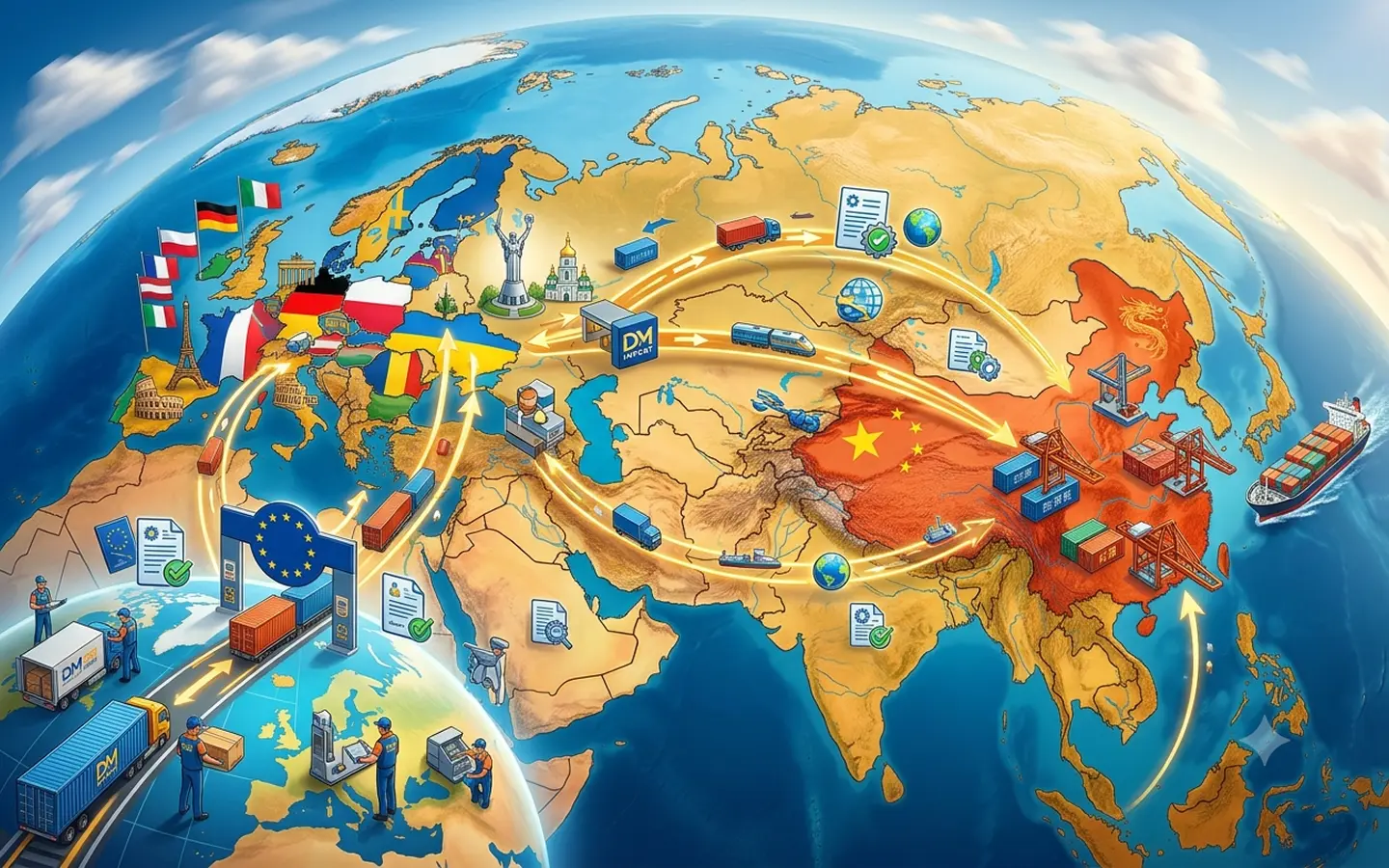
That is why Ukrainian businesses are increasingly purchasing robotic equipment directly from China.
The role of DM IMPORT in the supply of robotic equipment
For companies planning to automate production or logistics, it is important not only to find the equipment but also to correctly organize the entire import process.
DM IMPORT helps businesses to:
- Find verified manufacturers of robotics in China;
- Organize the procurement of equipment;
- Verify product quality;
- Monitor production;
- Organize international delivery;
- Prepare documents for import;
- Support customs clearance;
- Optimize logistics and costs.
In fact, DM IMPORT acts as an external department of international procurement and logistics for Ukrainian business.
Will robots replace humans completely?
Despite the rapid development of AI and robotics, a complete replacement of humans is not expected in the near future.
Most likely, the future will look like this:
- Humans manage processes;
- AI analyzes data;
- Robots perform physical and routine work.
Such an approach will allow to:
- Increase productivity;
- Reduce costs;
- Reduce the number of errors;
- Compensate for staff shortages.
Conclusion:
Humanoid robots and robotic systems are already fundamentally changing manufacturing, logistics, medicine, and the service sector today. What seemed like futurism just a few years ago is gradually becoming a standard for modern business.
Humans still remain more efficient in many complex tasks, but robots have another key advantage—the ability to work continuously, stably, and without the human factor.
Therefore, automation is becoming one of the main directions of development for the global economy.
For Ukrainian companies planning to implement robotic solutions and import equipment from China, a reliable partner in the field of international procurement and logistics remains a crucial factor.
DM IMPORT helps businesses safely, quickly, and effectively organize the import of modern robotic equipment from China and implement new technologies in manufacturing, logistics, warehouses, restaurants, and other areas of activity.
Ready to implement robotic solutions for your business today?
Contact DM IMPORT for the selection and supply of humanoid robots, production automation, logistics optimization, and modern solutions for business. We will help reduce costs, increase operational efficiency, and implement innovative technologies that are already changing manufacturing, warehouses, and enterprises around the world today.
Phone / WhatsApp: +38 098 773 13 13
Email: dmimportua@gmail.com
Instagram: DM-Import
Telegram: @dmimportua