Just a few years ago, industrial and humanoid robots were considered expensive technologies available only to large multinational corporations. However, by 2026, the situation has changed dramatically.
Thanks to the rapid growth of Chinese robotics manufacturers, lower component costs, and the integration of artificial intelligence, automation has become economically viable even for medium-sized businesses.
Today, more and more companies in China, Europe, and other parts of the world are adopting robotic solutions because, in many cases, using a robot already costs less than employing a single worker.
This enables businesses to reduce operating costs, increase productivity, and remain competitive.
Why have robots become more affordable?
The main reason is the rapid expansion of robotics manufacturing in China. Local companies are heavily investing in their own technologies, localizing component production, and introducing an increasing number of robotic solutions for various industries.
Modern robots are equipped with computer vision systems, advanced sensors, artificial intelligence, and self-learning capabilities. At the same time, their prices continue to decrease while their functionality keeps expanding.
For businesses, this means that investments in automation pay for themselves much faster than they did just a few years ago.
Where are businesses saving money?
Manufacturing
Manufacturing companies were among the first to experience the benefits of automation.
Robots perform tasks such as:
- Product assembly;
- Welding;
- Painting;
- Packaging;
- Quality inspection;
- Transferring parts between production lines.
They work continuously without breaks, maintain consistent accuracy, and deliver stable product quality.
Logistics and warehousing
Warehouse robots have become a common feature of modern logistics centers.
They are responsible for:
- Sorting goods;
- Order picking;
- Pallet transportation;
- Automated material handling;
- Inventory management.
This significantly reduces order processing times while minimizing operational errors.
Construction
The construction industry is also rapidly adopting robotic technologies.
Modern robotic systems can:
- Perform finishing works;
- Apply plaster;
- Paint surfaces;
- Cut construction materials;
- Assist with structural installation.
Automation accelerates project completion while reducing dependence on skilled labor shortages.
Agriculture
In agriculture, robots are increasingly used for:
- Weeding;
- Fertilizer application;
- Harvesting;
- Product sorting;
- Orchard maintenance.
This is especially valuable during seasonal labor shortages.
Solar power plant maintenance
One of the fastest-growing applications is robotic maintenance of solar power plants.
These robots can:
- Mow grass beneath solar panels;
- Clean surrounding areas;
- Operate safely on slopes;
- Maintain large sites with minimal human involvement.
Such solutions are already widely implemented in many countries worldwide.
Why is a robot often cheaper than an employee?
When evaluating labor costs, businesses consider much more than salaries alone.
The total cost of employing a worker includes:
- Wages;
- Taxes;
- Social contributions;
- Training;
- Paid vacation;
- Sick leave;
- Employee turnover risks.
After purchase, a robot mainly requires technical maintenance, electricity, and periodic servicing. At the same time, it can operate 24/7 without breaks or loss of productivity.
For many manufacturing processes, this makes automation a far more cost-effective solution.
China is becoming the global leader in robotics
Chinese manufacturers already offer a wide range of robotic solutions, including:
- Industrial robotic arms;
- Autonomous warehouse robots;
- Autonomous transport platforms;
- Construction robots;
- Agricultural robots;
- Service robots;
- Next-generation humanoid robots.
Growing competition among manufacturers is driving technological innovation while steadily reducing equipment costs.
How DM IMPORT helps businesses implement automation?
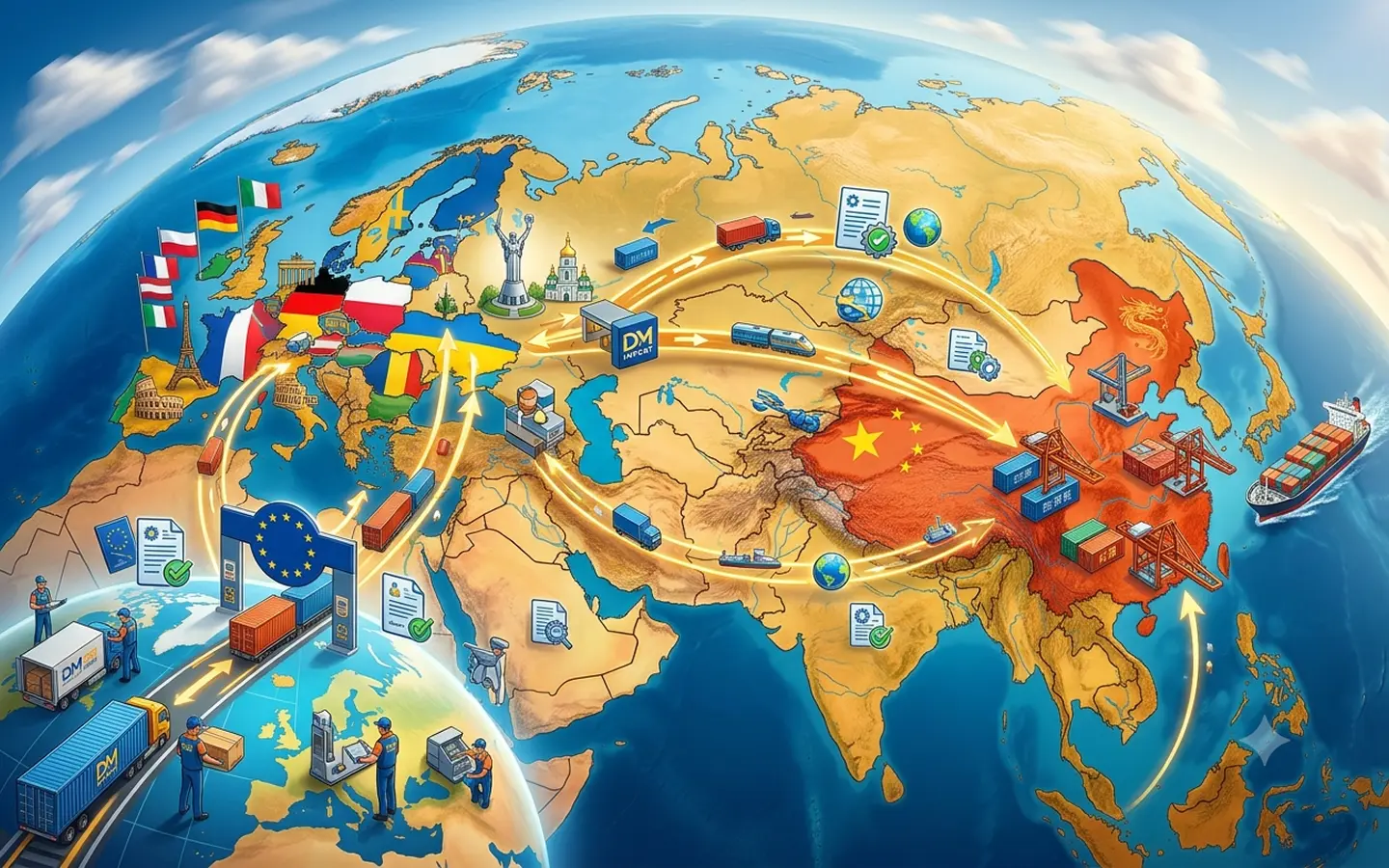
DM IMPORT helps companies import advanced robotic equipment directly from China.
Our services include:
- Manufacturer sourcing;
- Factory verification;
- Supplier negotiations;
- Quality control;
- International logistics organization;
- Customs clearance;
- Delivery to Ukraine and EU countries;
- Complete project support.
Thanks to our extensive experience working with Chinese manufacturers, our clients gain access to cutting-edge robotic technologies with minimal risk.
Conclusion:
In 2026, automation is no longer a technology of the future—it has become a practical tool for reducing costs and improving business efficiency.
Chinese robots are increasingly becoming less expensive than employing a single worker while delivering consistent quality, high productivity, and uninterrupted operation.
That is why companies investing in robotic solutions today gain a significant competitive advantage and build a strong foundation for future growth.
Planning to automate your production or import robotic equipment from China?
Contact DM IMPORT for manufacturer sourcing, supplier verification, and international logistics. We will help you find the right manufacturer, organize procurement, arrange international shipping, handle customs clearance, and provide comprehensive support throughout the import process for modern robotic solutions tailored to your business.
📞 Phone / WhatsApp: +38 098 773 13 13
📩 Email: dmimportua@gmail.com
📸 Instagram: DM-Import
📲 Telegram: @dmimportua